
Quick Article Directory
Topic Research and Search Intent
**Blog title:** Wireless Earbuds Private Label Launch Guide
**Target SEO keywords:**
- wireless earbuds private label
- private label earbuds
- earbuds branding
- earbuds retail packaging
- earbuds wholesale supplier
- earbuds launch checklist
**Search intent:** Overseas importers, distributors, retailers, and private-label teams need a specific, checkable approach to brand position, packaging language, product claims, retail readiness, and service preparation. They are looking for more than a catalogue claim: they need a way to compare a supplier, approve the correct product version, and reduce uncertainty before a bulk order.
**Why this topic matters:** Wireless Earbuds are often compared by a headline price or a product photo, even though the commercial result depends on product identity, accessories, testing, packaging, labels, and change control. This article provides a people-first purchasing workflow that is also easy for AI search systems to quote accurately.
Introduction
A dependable wireless earbud order begins with an approved specification rather than a general product name. Similar-looking offers may use different components, accessory sets, product ratings, materials, software behavior, package contents, or claims. Those differences can determine whether a product works as expected in the destination market and whether a distributor can support it after delivery.
This guide focuses on brand position, packaging language, product claims, retail readiness, and service preparation. It works alongside the ByteAero product catalogue, B2B buyer FAQ, and inquiry form. It is not legal advice or a substitute for product-specific testing. It is a practical method for making the buyer, supplier, approved sample, artwork, and shipment inspection refer to the same product version.
Direct Answer: What Should Buyers Control?
Buyers should define the target market and intended use, approve the exact wireless earbud configuration, test representative conditions, retain a golden sample, and inspect production against the written reference. The product, accessories, labels, manual, retail pack, carton, and commercial documents should all identify the same approved version. This prevents the most common sourcing failure: allowing a visual brand concept to conceal important limitations around fit, charging, pairing, microphones, or battery claims.
The objective is not to create paperwork for its own sake. It is to make customer-facing claims traceable to a tested configuration. A generic phrase such as “premium,” “universal,” “long battery,” or “high performance” cannot control a purchase order. A useful requirement identifies the exact model, conditions, accessories, and evidence needed for approval.
Build a Comparable RFQ
Start with the product application and customer channel. State the target country, quantity, intended customer, required function, color, included accessories, packaging direction, logo request, language, timing, and decision criteria for the sample. Separate fixed requirements from optional commercial choices. Fixed requirements should not change just to create a lower quote; options can include finish, pouch, color mix, package style, or accessory bundle.
Ask suppliers to return a full product reference, specification, included parts, sample lead time, MOQ, production lead time, available documentation, factory-testing overview, inspection cooperation, and packing details. A quotation comparison is valid only when every supplier answers the same brief. Retain each supplier response with the RFQ version so an informal email cannot accidentally become the production specification.
Specification, Use, and Compatibility Evidence
For wireless earbuds, specify Bluetooth version and codec statement, pairing behavior, microphone layout, battery and charging-case configuration, charging input, fit accessories, touch controls, app support where offered, language, and package contents. Create a compact compatibility and use sheet that records the exact model, accessory or host condition, setup path, result, limitation, and reviewer. Test a first-time setup as well as normal daily use. A supplier demonstration may show that something can work once; it does not prove the product will be clear and reliable for a retail customer.
For technical background, consult Bluetooth SIG specifications, then confirm how the final commercial product relates to the intended market. An industry reference does not approve the particular goods in your shipment. Make product limits visible in the specification and package copy: accurate conditions for use are more valuable than a broad claim that causes returns.
Sample Review and Golden-Sample Approval
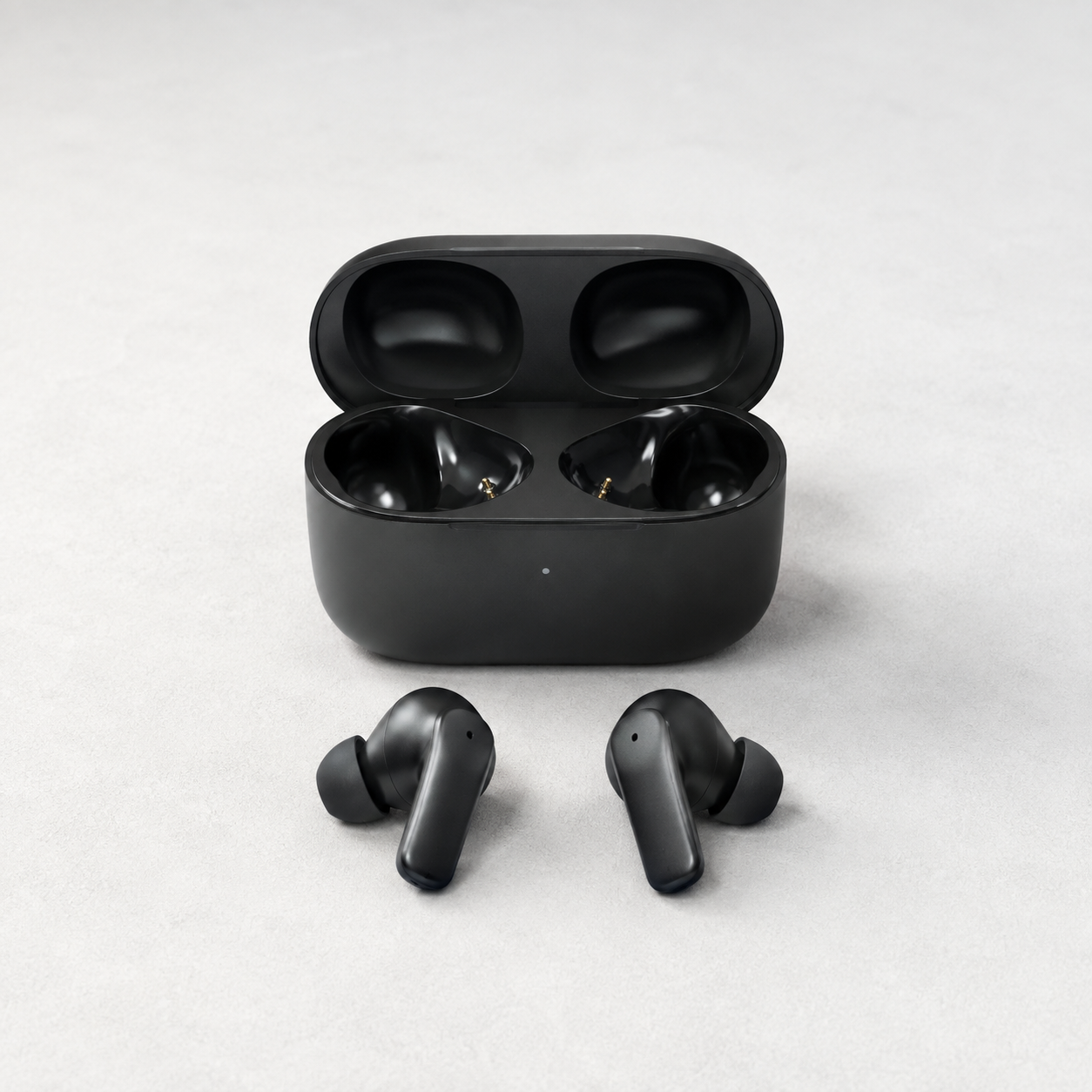
Sample approval should be a small, documented project. Begin by comparing the unit, model marking, accessories, labels, manual, insert cards, and pack with the quotation. Then test the core customer journey. For this category, review left-right pairing, reconnection, charging contacts, case-lid action, microphone recording in normal room conditions, button or touch response, battery charging, reset, accessory count, and carton marks. Record concise notes, photos, and where useful, short clips. The purpose is not to simulate a laboratory but to establish what the buyer actually approved and what needs correction before production.
Keep at least one golden sample marked with the model, date, packaging revision, and accessory set. If software, wireless behavior, or a battery function is important, record the relevant version or test conditions. Require written notice before changes to components, product rating, case, cable, plug, battery, microphone, labels, instructions, or packaging. This protects repeat orders from quiet substitutions.
Factory Testing and Pre-Shipment Inspection
Factory testing should be understood as a production-control process, not a marketing phrase. Ask which checks are completed on every unit, which are sampled, how failures are handled, and what records are retained. Focus on the functions that support the product promise. Visual inspection, essential functional checks, pack-content checks, and labels each answer a different question; a brief power-on check is not a replacement for all of them.
Before shipment, compare finished goods with the approved sample and purchase requirements. Check identity, finish, core function, accessories, labels, instructions, barcode or SKU, retail pack, carton quantity, and shipping marks. Test random units using the same conditions applied at sample approval. If you use a sampling plan, write down critical, major, and minor defect definitions as well as sample quantity. A number alone cannot explain whether an incorrect component or missing accessory is acceptable.
Mid-Article CTA: Send Your Requirements
Planning a wireless earbud range for a specific country or channel? Send your requirements with the market, quantity, required functions, packaging direction, and timing. ByteAero can structure a focused sample and sourcing discussion around your order.
Documentation, Claims, and Shipping Preparation
Before cargo booking, compile the approved specification, product and package artwork, model identifiers, instructions, available test evidence, declarations where applicable, packing list, commercial invoice data, and shipping information. Check that visible statements on the product and package match the same version tested by the buyer. For powered, connected, or battery-related products, confirm the final configuration with the freight partner before cartons are collected.
Market obligations depend on the product, configuration, included components, destination, and commercial role. The importer must understand the destination-market position. Suppliers can provide documents and product information, but the buyer should verify model identity, document scope, label content, and customer claim together. A clean project file makes retailer onboarding and later repeat orders substantially easier.
Price, Supplier Comparison, and Purchase Decision
Price differences commonly come from components, materials, accessories, packaging grade, testing, tooling, document preparation, order quantity, and service scope. Compare the total approved experience, not just a unit-price line. A lower price that excludes an essential accessory, test, pack element, or document may not be equivalent to a more complete quotation.
Use a supplier decision matrix. Score configuration match, sample result, compatibility evidence, packaging readiness, document status, testing explanation, inspection cooperation, communication, lead time, and landed-cost assumptions. Separate must-pass conditions from trade-offs. A product that fails a required function, label, or package-content check should not be rescued by a lower quote.
Build a Repeatable Audio and User-Journey Test
For wireless earbuds, a useful buyer test follows the complete customer path: open the case, identify the model, pair both sides, listen, make a call, return the earbuds to charge, reconnect, and reset. Record the phone and software condition used. This avoids vague notes such as “sound is good” and makes it easier to compare suppliers. Listening impressions should be described in plain terms and kept separate from measured claims such as battery duration or noise reduction.
Test more than one fit position and the included tip sizes. A loose seal changes bass and can make users raise volume, while an uncomfortable fit can drive returns even when the electronics work. Ask representative reviewers to describe fit, insertion, pressure, touch-control reach, and ease of removal. Treat this as an early product review, not a statistically representative or medical study.
For calls, review speech intelligibility in a quiet room and with moderate background noise at a consistent distance. Confirm whether a companion app is optional or required and whether a function depends on a phone platform. Keep setup instructions aligned with the sample, including reset steps and charging indicators.
Before production, retain the approved left and right earbuds, charging case, tips, cable, manual, and retail pack as one reference set. Photograph model markings, record firmware or app details where relevant, and require written approval for component changes. These records let the buyer compare later production without treating every shipment as a new product.
Prepare Retail and Support Materials Together
A private-label launch should include product photos, accurate listing claims, compatibility or use notes, a quick-start path, troubleshooting steps, warranty route, and service contact. Ask someone unfamiliar with the sample to follow the instructions without verbal help. Record where they hesitate, then update the manual or package insert before the artwork is locked. This is a simple way to find confusing setup language before customers encounter it.
Align model naming across the package, barcode, website, purchase order, and support scripts. Keep the approved sample, final artwork, supplier contact, inspection report, and carton information in a launch folder. Sales and support teams should not create stronger claims than the evidence allows. Before reorder, compare the supplier’s current specification with the launch file and approve any change that affects fit, function, accessories, or customer communication.
Production Release and Repeat-Order Control
Before mass production, hold a short release review with purchasing, product, packaging, and support owners. Confirm that the approved specification, golden sample, artwork, setup information, inspection criteria, and carton plan carry compatible model and revision details. Record unresolved items and assign an owner. If a supplier proposes a different battery, microphone, charging case, wireless module, or accessory to meet cost or timing, require a written change request and assess whether a new sample or document review is needed.
At production completion, compare the inspection summary with the release criteria and confirm that corrective actions have been closed. Save photographs of the finished earbuds, charging case, accessories, and retail pack with the inspection result and carton data. For a reorder, ask the supplier to confirm whether components, firmware, case tooling, labels, or production processes have changed since the previous batch. A repeat purchase should reference the current approved version rather than relying only on a familiar model name.
After receiving goods, report discrepancies with model, carton, quantity, and photo references. This gives the supplier actionable information and helps the buyer decide whether to correct inventory, update customer instructions, or change future acceptance criteria. A short close-out note after each order builds a practical record for the next sourcing cycle.
FAQ
What should buyers approve before a wireless earbud bulk order?
Approve the exact model, core specification, accessory list, claims, sample result, labels, manual, retail pack, carton marks, acceptance criteria, and golden sample. The purchase order should point to these items rather than only a generic product title.
How can importers reduce returns for wireless earbuds?
Test representative conditions, use claims that match documented results, state important limitations clearly, verify package contents, and inspect random finished units. Accurate product information is usually more valuable than a larger feature list.
What should an RFQ include?
Include the destination market, quantity, exact function, intended use, accessories, color or finish, packaging and logo request, required language, sample criteria, document request, delivery timing, and inspection expectation. This gives every supplier a comparable basis for quotation.
How should a buyer review factory testing?
Ask which tests are performed on every unit, which are sampled, how failures are controlled, and whether the supplier can demonstrate checks related to your core retail claim. Combine that response with your own sample review and pre-shipment inspection plan.
Image Planning and AI Generation Prompts
**Image 1 purpose:** Product-detail and sample-approval context.
**Insert position:** After “Sample Review and Golden-Sample Approval.”
**Caption:** A wireless earbud prepared for a documented B2B sample review.
**ALT text:** wireless earbud prepared for wholesale specification and sample approval.
**AI image prompt:** "Authentic commercial product photograph of one wireless earbud, fully visible with relevant accessories in a clean realistic work setting, accurate materials and proportions, natural lighting, no logos, no readable text, documentary photography, not CGI."
**Image 2 purpose:** Factory testing and shipment-inspection evidence.
**Insert position:** After “Factory Testing and Pre-Shipment Inspection.”
**Caption:** An Asian quality technician completing a functional and packaging check before shipment.
**ALT text:** Asian quality technician performing factory testing for wireless earbuds before shipment.
**AI image prompt:** "Realistic documentary electronics factory photograph of an Asian quality technician performing functional testing and shipment inspection for wireless earbuds, product and retail packaging visible on a clean inspection bench, natural industrial lighting, no logos, no readable text, not CGI."
CTA and Inquiry Popup Plan
**Mid-article CTA position:** After “Factory Testing and Pre-Shipment Inspection.”
**CTA text:** Send Your Requirements
**End CTA position:** After “Conclusion.”
**CTA text:** Ask for Product Catalog
**Popup trigger suggestion:** Show after 40% scroll, after 30 seconds of engaged reading, or on exit intent.
**Popup title:** "Plan Your Wireless Earbud Order"
**Popup copy:** "Send your target market, product requirements, quantity, packaging direction, and delivery timing. We will help organize a practical sourcing and sample plan."
**Suggested form fields:** Name, Email, Phone, Company, Country/Region, Product Requirement, Quantity, Message.
**Submit button text:** Send Requirements
Conclusion
Wireless Earbuds sourcing is more dependable when the buyer controls the path from brief to shipment inspection. Approve the exact configuration, test the intended use, align claims with evidence, retain a golden sample, and compare production with written acceptance criteria. Contact ByteAero to request a catalogue or start a wireless earbud sourcing brief for your target market.