Quick Article Directory
Bluetooth Speaker Wholesale Buying Guide for Retail and Gift Buyers
Topic Research and Search Intent
Blog title: Bluetooth Speaker Wholesale Buying Guide for Retail and Gift Buyers
Target keyword: Bluetooth speaker wholesale buying guide
Search intent: Overseas buyers want to compare Bluetooth speaker models, verify sound quality, battery performance, Bluetooth version, waterproof claims, packaging options, and shipment inspection steps before requesting samples or bulk quotations.
Why this topic fits a B2B export website: Bluetooth speakers are purchased for retail, promotional gifts, outdoor lifestyle channels, travel accessories, and private-label programs. Buyers often search practical questions before buying: what size sells well, how to test bass and battery life, whether waterproof claims are reliable, and how packaging should be prepared. This topic can support both AI search answers and B2B inquiry conversion.
Introduction
Bluetooth speakers remain a strong consumer electronics category because they serve many everyday scenarios: home listening, travel, outdoor activities, office desks, student rooms, small events, and corporate gifting. For wholesale buyers, the category offers flexible price points, packaging options, and private-label opportunities. However, the difference between a successful speaker order and a problematic one often comes down to realistic specification planning and quality testing.
Product photos can make many speakers look powerful. A compact speaker may be shown beside water, in an outdoor scene, or with dramatic lighting. But B2B buyers need to know what is inside the product: driver size, output power, battery capacity, Bluetooth chipset, charging port, enclosure design, waterproof structure, microphone function, button feel, packaging, and inspection process. A speaker should be evaluated by real listening, not by image alone.
This guide is written for importers, distributors, retail buyers, gift companies, and marketplace sellers sourcing Bluetooth speakers wholesale. It explains how to evaluate sound, battery, materials, waterproof claims, factory testing, packaging, and RFQ preparation. For related audio sourcing, buyers can also review ByteAero's wireless earbuds quality-control guide, because audio products share many inspection principles.
Define the Target Use Case First
A Bluetooth speaker for a supermarket promotion is different from a speaker for outdoor lifestyle retail. A gift buyer may prioritize logo printing, compact size, and stable basic sound. A retail electronics chain may need stronger packaging, display-ready product photos, and a better acoustic experience. An outdoor buyer may care about water resistance, rubber finish, lanyard design, and battery life. A premium buyer may want clearer treble, stronger bass, Type-C charging, and a refined surface finish.
Before comparing models, define:
- Target channel: retail, online marketplace, corporate gift, outdoor store, travel shop, or electronics distributor.
- Price level: entry, mainstream, or premium.
- Key selling point: compact size, bass, waterproof claim, long battery, RGB light, microphone, or stereo pairing.
- Packaging: neutral box, ByteAero packaging, private label, or gift packaging.
- Compliance and shipment needs for the destination market.
When customer requirements are clear, factory recommendations become more accurate and sample testing becomes easier.
Key Specifications to Confirm
Speaker Size and Driver Configuration
Small speakers are easy to sell as gifts and travel accessories, but they cannot produce the same sound as larger models. Buyers should confirm driver size, passive radiator design, output power, and enclosure structure. Output wattage should not be treated as the only sound-quality indicator. A well-designed smaller speaker can sound balanced, while a poorly designed high-wattage speaker may distort at higher volume.
Battery Capacity and Play Time
Battery life claims should be reviewed under realistic conditions. A supplier may state play time at 50% volume, while end customers may use higher volume outdoors. Ask how play time is tested, what battery capacity is used, and how long charging takes. Lithium-ion batteries are widely used in portable consumer electronics; the U.S. Department of Energy notes that lithium-ion batteries are common in phones and laptops because of their high energy relative to weight and volume. Buyers should still handle battery specifications carefully and confirm shipment requirements when products include built-in batteries.
For air shipment considerations, official FAA information on lithium batteries is a useful reference for understanding why battery classification and documentation matter.
Bluetooth Version and Connection Stability
Bluetooth version, antenna design, chipset quality, and firmware all affect connection stability. The Bluetooth SIG explains that newer Bluetooth audio technologies such as LE Audio can improve audio performance and enable new use cases, but buyers should not assume every speaker supports every new feature. Confirm the actual Bluetooth version, codec support when relevant, pairing distance under practical conditions, and whether the speaker reconnects smoothly after power cycling.
Waterproof and Dustproof Claims
Waterproof claims can be strong selling points, but they must be accurate. A speaker described as splash-resistant is not the same as a speaker designed for immersion. Buyers should ask what testing supports the claim and how ports are protected. If the product has a rubber cover over the charging port, inspect the fit, hinge strength, and sealing consistency. Avoid using outdoor water imagery on packaging unless the product claim is supportable.
Charging Port and Cable
Type-C charging is now preferred for many markets. Buyers should confirm charging current, cable included or not included, charging time, and whether the charging port is protected. For bundled accessories, packaging should list what is included: speaker, charging cable, manual, lanyard, retail box, or gift box.
Factory Testing and Listening Checks
Bluetooth speaker testing should include both functional checks and listening checks. A speaker is not only an electronic device; it is an audio product. Buyers should approve a sample based on sound, finish, and real usage.
Recommended factory testing includes:
- Appearance inspection for scratches, dust, color consistency, grille alignment, and logo accuracy.
- Bluetooth pairing test with Android and iOS devices.
- Music playback test at low, medium, and high volume.
- Distortion check using several song types or audio samples.
- Button function test.
- Charging test and LED indicator check.
- Battery sample test based on agreed method.
- Microphone call test if the model includes hands-free function.
- Waterproof structure inspection if advertised.
- Packaging and accessory verification before shipment.
For shipment inspection, buyers should define sampling level, carton quantity, color mix, barcode labels, manual language, and packaging artwork approval. If the speaker includes a battery, confirm shipping documents and carton markings with the logistics provider before dispatch.
Product Application Scenarios
Bluetooth speakers can serve several profitable B2B applications:
- Retail electronics accessories.
- Outdoor and travel products.
- Corporate gift programs.
- Student and lifestyle retail.
- Marketplace bundles.
- Hotel, event, or promotional giveaways.
For corporate gifts, buyers usually need stable supply, logo printing, and reliable packaging more than advanced features. For retail, shelf appearance and sound demonstration matter. For outdoor buyers, water resistance, rubber texture, and battery life are more important. The same speaker will not fit every channel, so suppliers should be briefed on the buyer's real sales scenario.
Packaging and Branding Preparation
Good packaging should communicate the product clearly without overpromising. Include speaker size, output power if verified, battery capacity or play time with test condition, Bluetooth version, charging port, waterproof rating if applicable, included accessories, barcode, warranty statement, and manufacturer/importer information as required by the market.
Private-label projects should confirm logo method early. Options may include silk screen printing, pad printing, laser marking on metal parts, woven label, or printed packaging only. Logo placement should not interfere with buttons, speaker grille, or waterproof covers.
Common Buyer Mistakes
The first mistake is approving a speaker based only on appearance. Audio quality should be checked by listening. The second mistake is using battery-life claims without understanding test conditions. The third mistake is using waterproof marketing language without verifying structure and test basis. The fourth mistake is forgetting shipment requirements for battery products until the goods are ready.
Supplier Evaluation for Audio Products
Bluetooth speaker buyers should evaluate more than price and product photos. A strong supplier should be able to explain driver selection, battery capacity, charging design, waterproof structure when applicable, packaging options, and inspection process. For repeat orders, production consistency matters. A small change in driver, amplifier board, battery cell, enclosure material, or firmware can change the sound and user experience.
Ask whether the supplier can maintain the same acoustic configuration across repeat orders. If components change, the buyer should receive updated samples before mass production. This is especially important for private-label projects, because customers expect the same product experience when they reorder from the same brand.
A golden sample is useful for Bluetooth speakers. It should include the speaker body, sound profile reference, surface finish, button feel, charging cable, lanyard if included, user manual, retail packaging, logo position, and carton mark. During shipment inspection, the inspector should compare production units against this sample and perform practical listening checks, not only visual checks.
RFQ Example for Bluetooth Speaker Buyers
A clear RFQ helps suppliers recommend realistic models:
"We are sourcing portable Bluetooth speakers for outdoor lifestyle retail. Please quote compact and mid-size models with Type-C charging, built-in battery, waterproof option if available, private-label logo, English retail packaging, and carton details. Please confirm driver size, output power, battery capacity, estimated play time test condition, Bluetooth version, sample lead time, production lead time, and shipment inspection options."
This RFQ tells the supplier the application, sales channel, and key requirements. It also makes quotation comparison easier. If one supplier quotes a much lower price, the buyer can check whether the driver, battery, waterproof structure, packaging, or accessories are different.
Battery and Logistics Preparation
Because Bluetooth speakers usually include built-in lithium batteries, logistics should be discussed early. Buyers should ask suppliers what battery documentation is available and whether the shipment method supports the product category. Air freight, express delivery, and sea freight may have different document requirements and restrictions. Waiting until production is finished can delay shipment.
Carton packing should also protect the product. Speakers are heavier than cables or small adapters, so inner trays, retail box strength, master carton thickness, and drop protection matter. During shipment inspection, check carton condition, box compression, accessory placement, and whether the product can move too much inside the retail box.
After-Sales and User Education
After-sales issues for Bluetooth speakers often involve charging, pairing, battery life, water exposure, or sound expectations. Buyers can reduce complaints by adding simple instructions: how to pair, how to reset, how to charge, what the LED indicators mean, and what the waterproof rating does or does not cover. If the product supports stereo pairing, explain the pairing sequence clearly.
For distributors, collect defect reports with batch number, photos, short videos, device model, and usage details. If a customer reports poor battery life, ask about volume level and usage environment. If a customer reports Bluetooth disconnection, ask about distance, obstacles, device model, and whether multiple devices were paired. Practical evidence helps the supplier identify whether the issue is production-related, usage-related, or compatibility-related.
FAQ
What is a good Bluetooth speaker for wholesale retail?
A good retail model balances sound quality, battery life, stable Bluetooth pairing, attractive packaging, and realistic claims. The best model depends on the target channel, price point, and customer expectations.
How should buyers test Bluetooth speaker sound quality?
Test several samples with different music types at low, medium, and high volume. Listen for distortion, weak bass, harsh treble, vibration noise, and connection interruptions.
Are waterproof Bluetooth speakers better for wholesale?
They can be attractive for outdoor channels, but waterproof claims increase testing and packaging responsibility. Buyers should verify the claim and avoid overpromising.
What information is needed for a quote?
Provide target price, speaker size, battery requirement, Bluetooth version preference, waterproof requirement, packaging style, logo needs, destination market, and estimated order quantity.
Image Planning and AI Generation Prompts
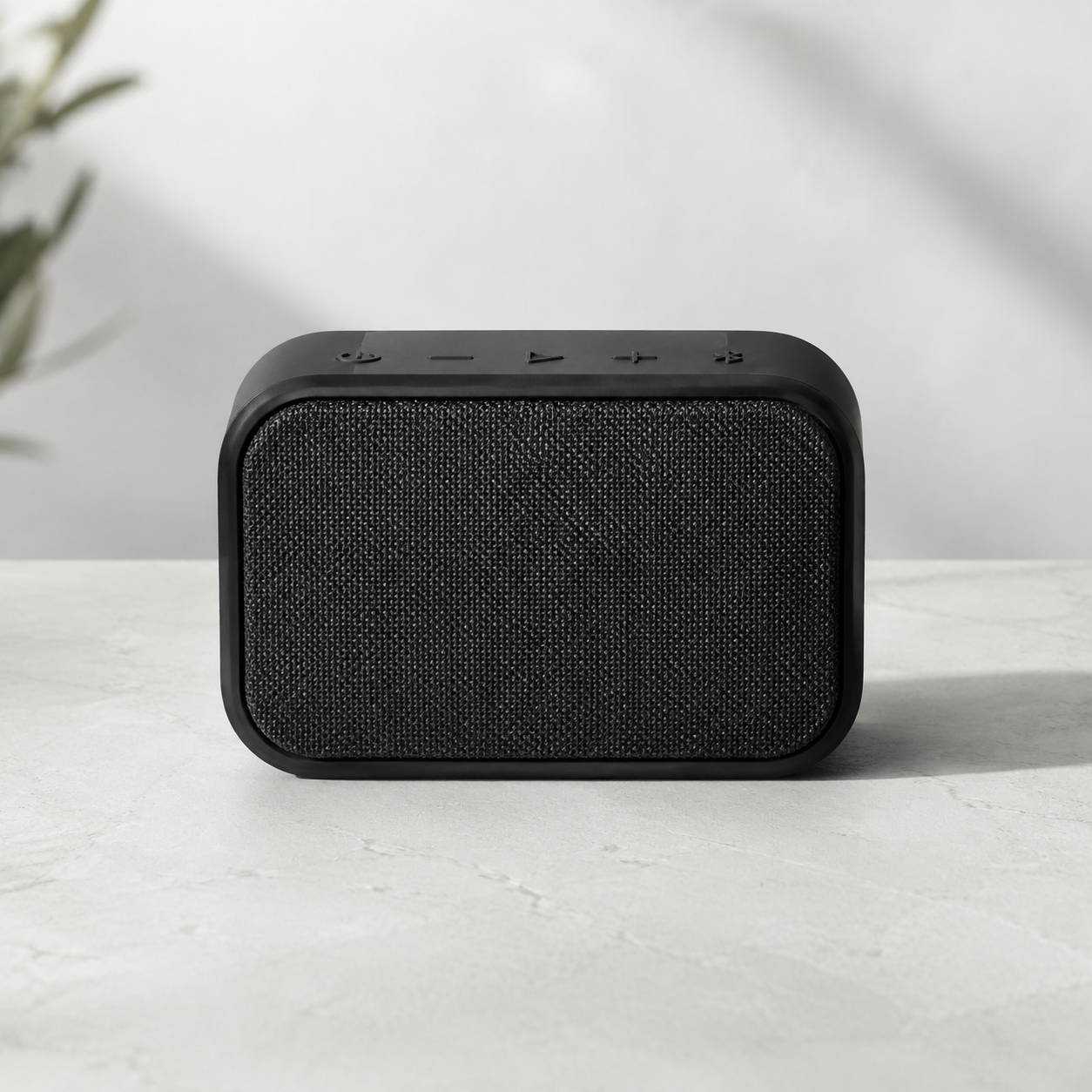
Image 1 purpose: Product detail photo.
Insert position: After "Key Specifications to Confirm".
Caption: "Speaker grille, buttons, charging port, and finish quality should be checked during sample approval."
ALT text: "Bluetooth speaker product detail for wholesale sample approval"
AI image prompt: "Realistic square product photography of one compact Bluetooth speaker on a clean studio surface, grille buttons and USB-C charging port visible, full product visible, premium electronics style, no CGI, no text."
Image 2 purpose: Factory testing photo.
Insert position: After "Factory Testing and Listening Checks".
Caption: "Bluetooth speaker testing should include pairing, playback, charging, and visual inspection."
ALT text: "Bluetooth speaker factory testing and quality control"
AI image prompt: "Realistic electronics factory photo, Asian quality control worker testing Bluetooth speakers with smartphones and audio test equipment, clean production bench, authentic documentary lighting, professional export manufacturing."
Image 3 purpose: Application scene photo.
Insert position: After "Product Application Scenarios".
Caption: "Application planning helps buyers choose the right speaker size, finish, and packaging for the sales channel."
ALT text: "Bluetooth speaker outdoor retail application scene for wholesale buyers"
AI image prompt: "Realistic lifestyle product photography of a single portable Bluetooth speaker on an outdoor table near travel accessories, natural daylight, premium but authentic look, full product visible, no artificial AI style."
CTA and Inquiry Popup Plan
Mid-article CTA position: After "Factory Testing and Listening Checks".
CTA text: Contact Us
CTA copy: "Tell us your target sales channel, battery requirement, waterproof needs, and packaging plan. ByteAero can recommend Bluetooth speaker models for sampling."
End CTA position: After "Conclusion".
CTA text: Get a Quote
Popup trigger suggestion: Show after the reader scrolls 40%, after 30 seconds on page, and on exit intent.
Popup title: "Looking for Bluetooth Speakers Wholesale?"
Popup copy: "Send your product requirements and target market. We will help match speaker models, packaging options, and sample suggestions."
Suggested form fields: Name, Email, Phone, Company, Country/Region, Speaker Type, Target Price, Order Quantity, Message.
Submit button text: Send Requirements
Conclusion
Bluetooth speaker wholesale sourcing should combine product application planning, sound testing, battery review, waterproof claim verification, packaging preparation, and shipment inspection. Buyers who define customer requirements early can choose better models and reduce avoidable issues before mass production.
ByteAero supplies consumer electronics and digital accessories for international retailers, distributors, and B2B buyers. Contact us with your speaker requirements, packaging style, and order quantity to receive practical model recommendations.