
Everyday TWS earbuds
Accessible models for general retail, gifting, and broad mobile compatibility.
Prioritize stable pairing, clear controls, comfortable fit, charging reliability, and simple reset instructions.Select entry, call-focused, ANC, sport, or open-ear products using controlled samples, target-phone testing, approved packaging, and repeatable production checks.
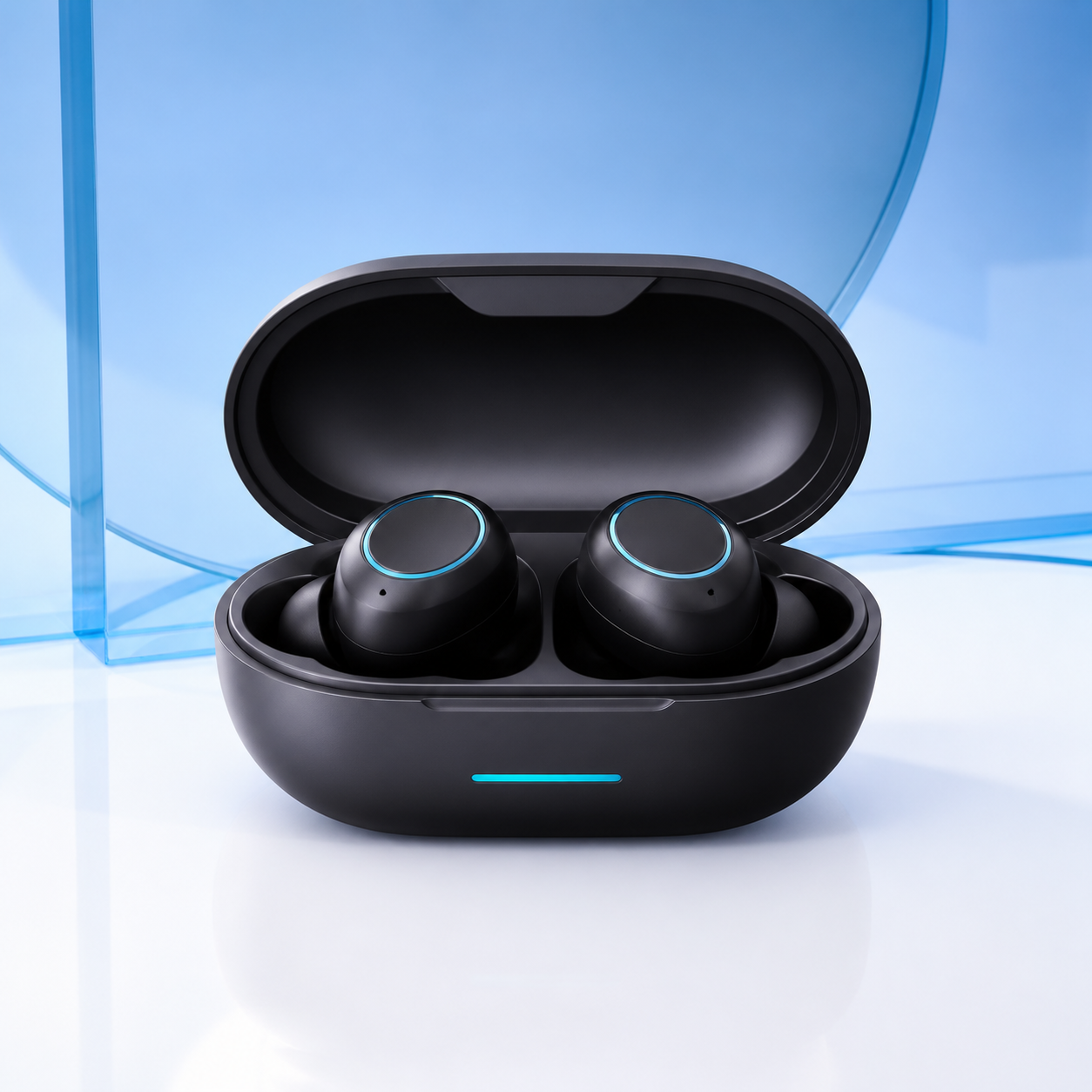
Earbuds that look similar can differ in fit, acoustic tuning, microphones, Bluetooth behavior, controls, latency, battery performance, charging contacts, application support, and case quality. Samples should be compared using the same phones, recordings, volume, calls, and wear panel.
Accessible models for general retail, gifting, and broad mobile compatibility.
Prioritize stable pairing, clear controls, comfortable fit, charging reliability, and simple reset instructions.Microphone-focused models for calls, remote work, commuting, and online meetings.
Compare original call recordings in quiet, street, wind, and indoor noise conditions.Higher-value in-ear products with noise control and transparency modes.
Test mode consistency, fit dependence, pressure comfort, call behavior, controls, and battery impact.Ear-hook or wing designs for movement, outdoor use, and secure fit.
Run multiple-user fit trials, movement tests, sweat-related handling, button access, and case checks.Awareness-focused formats for office, exercise, and all-day use.
Review stability, driver position, leakage, voice quality, comfort, and acoustic consistency across users.Models with configurable controls, EQ, naming, firmware, or brand presentation where supported.
Clarify app ownership, update responsibility, language, privacy information, and long-term support.Customization is useful only when the final configuration remains clear to the buyer, supplier, inspector, and sales channel.
Confirm each option before quotation and repeat it in the approved sample record. Final capability, documentation, MOQ, lead time, and compliance scope depend on the selected product and destination market.
Send Project BriefA repeatable approval sequence keeps commercial expectations and product evidence connected.
Share the target market, sales channel, application, quantity, packaging needs, and timing.
Review configuration, samples, test evidence, commercial scope, and known product limitations.
Freeze the product, accessories, appearance, labels, artwork, instructions, and packaging.
Use the approved reference for production follow-up, inspection, cartons, and document handoff.

Test initial pairing, reconnection, left-right synchronization, controls, and documented reset steps.
Use reference tracks and original call recordings across defined phones and environments.
Review earbuds, case, contacts, cable, recharge behavior, indicators, and low-battery operation.
Inspect comfort, fit options, housing seams, mesh, hinge, magnets, finish, logo, and pack contents.
Build a price and feature ladder for dealers, retail, and e-commerce accounts.
Select fit, finish, packaging, and use cases that support a clear customer story.
Choose straightforward pairing, stable charging, visible branding, and recipient-friendly instructions.
Include your market, channel, estimated quantity, required configuration, packaging, and timing.
ByteAero will review the request and continue by email. Product capability, price, MOQ, samples, documentation, and delivery details are confirmed for the selected model and project.
Email: info@byteaero.com
Required fields are marked with *.
These answers outline the buying process. Final details depend on product, destination market, quantity, and customization scope.
Start with a defined audience and price position, then compare a limited set of everyday, call-focused, ANC, sport, or open-ear samples using the same test plan.
Keep the original recordings and use the same script, phone, application, distance, network, and environments. Do not rely only on supplier noise-reduction labels.
Some platforms may support naming, control, EQ, voice prompt, or application changes. Confirm the exact firmware scope, ownership, testing, MOQ, and update process.
Keep the approved earbuds, case, firmware, pairing name, ear tips, cable, labels, artwork, manual, barcode, packaging, appearance, and important test records.
Check pairing, left-right audio, microphones, controls, charging, case behavior, accessories, finish, labels, package contents, cartons, and comparison with the approved sample.