
Quick Article Directory
How to Choose Power Banks and Fast Chargers for Wholesale Distribution
Topic Research and Search Intent
Blog title: How to Choose Power Banks and Fast Chargers for Wholesale Distribution
Target keyword: power bank fast charger wholesale
Search intent: Importers, distributors, and retailers want to understand which charging products are safe, marketable, and suitable for their customers before requesting a quotation.
Why this topic fits a B2B export website: Charging accessories are high-demand products, but buyers must be careful with capacity claims, output ratings, protocol support, plug types, packaging, and safety checks. A detailed guide attracts decision-stage buyers and supports AI Overview style answers.
Introduction
Power banks and fast chargers are among the most common consumer electronics accessories in wholesale distribution. They are easy to understand from a customer perspective, but they are not simple products from a sourcing perspective. A buyer must compare electrical specifications, safety expectations, charging protocols, physical design, packaging, and logistics limitations. A product that looks profitable on a spreadsheet can create problems if the capacity claim is unclear, if the plug type does not match the market, or if the retail packaging does not explain the output correctly.
For overseas buyers, the main question is usually not "where can I buy power banks?" The more useful question is "how do I choose a reliable power bank or charger supplier and prepare a safe wholesale order?" This article gives a practical framework for evaluating charging products before sampling and bulk shipment.
ByteAero focuses on consumer electronics categories where product application, buyer requirements, and shipment preparation matter. Charging products are a strong fit for B2B content because buyers often search for comparisons, safety checklists, and supplier selection advice before they submit an inquiry.
Understand the Product Application First
Different charging products serve different channels. A slim 5,000 mAh power bank may work for travel retail and gifts. A 10,000 mAh model is often a balanced consumer option for daily use. A 20,000 mAh model may appeal to outdoor users, frequent travelers, and customers who need longer backup power. Fast wall chargers may target smartphone users, tablet users, or multi-device workspaces.
The buyer should define the end use before comparing specifications. For example, a retailer selling mobile accessories near checkout counters may prioritize compact packaging and strong shelf presentation. A distributor supplying telecom stores may need stable repeat availability and clear compatibility messaging. A corporate gifting buyer may need custom logo printing and controlled unit cost.
Clear product application also affects quality-control expectations. A travel product should be checked for compactness and packaging strength. A fast charger should be checked for plug type, output labeling, heat behavior, and compatibility claims. A power bank should be checked for charging input, output performance, case assembly, and included cable quality.
Power Bank Specifications Buyers Should Compare
The first specification buyers notice is capacity, but capacity alone is not enough. Power banks should be compared by rated capacity, actual usable output, battery cell type, input/output ports, charging speed, display indicators, shell material, cable inclusion, and packaging information.
Capacity and Usable Energy
Power bank capacity is commonly described in milliamp-hours. Buyers should understand that advertised capacity and actual usable output are not identical because voltage conversion and efficiency loss occur during charging. A professional supplier should be able to explain capacity in a clear and consistent way.
For B2B listings, avoid exaggerated claims. Instead, use conservative, practical language such as "10,000 mAh class power bank for daily backup charging" or "20,000 mAh model for extended use." This is more trustworthy than overpromising exact phone charging cycles that may vary by device model and battery condition.
Ports and Protocol Support
USB-A, USB-C, Lightning cable integration, and multi-port output all affect buyer decisions. USB-C input and output are increasingly important for modern charging products. If a charger or power bank supports fast charging, buyers should confirm which protocols are supported, what maximum output is available, and whether the packaging explains compatibility correctly.
Common details to confirm include input wattage, output wattage, USB-C PD support, QC support, cable rating, and whether multiple devices reduce output when used together.
Safety and Thermal Behavior
Charging products require careful quality attention. Buyers should discuss over-current protection, over-voltage protection, short-circuit protection, temperature behavior, and basic charging tests. For wholesale orders, the product should be tested under realistic use conditions, not only visually inspected.
Fast Charger Selection Factors
Fast chargers are small, but buyer risk can be high if specifications are unclear. A charger sold in the wrong plug type or with inaccurate output labeling can create returns and customer complaints.
Plug Type and Market Requirements
Confirm whether the target market requires EU, UK, US, AU, or other plug standards. Also confirm whether the product needs a fixed plug, foldable plug, or travel adapter format. Retail buyers should make sure product images, packaging, and online copy match the actual plug type shipped.
Output Rating and Device Compatibility
Fast charging claims should be specific. Instead of saying "super fast charger" without detail, product pages should mention wattage, ports, and compatible use cases. For example, a dual-port charger may support smartphone and earbud charging, while a higher-output USB-C charger may be better for tablets and selected laptops.
Packaging Clarity
Charging product packaging should not confuse customers. Output values, port names, included cable information, and plug type should be visible and accurate. If the buyer sells through online marketplaces, product description content should match the box and manual.
Factory Testing and Shipment Inspection
Factory testing for charging products should be practical and documented. The supplier should confirm appearance, port alignment, cable fit, charging input, charging output, LED/display function, shell assembly, labeling, and packaging completeness.
For shipment inspection, buyers can request:
- Random sample functional charging checks.
- Visual inspection for scratches, dents, gaps, and label errors.
- Verification of plug type and port configuration.
- Accessory and manual check.
- Retail box and carton label review.
- Quantity and carton condition verification.
If batteries are involved, buyers should also discuss shipping documentation and logistics requirements early. Power banks can be subject to stricter transport rules than simple cables or phone cases. Waiting until the shipment is ready can delay dispatch.
Packaging and Compliance Preparation
Packaging is especially important for charging accessories because customers often compare output and compatibility from the box. A buyer should prepare packaging copy carefully and avoid claims that the product cannot support. If the product is private label, artwork approval should include electrical ratings, warning statements, barcode placement, country language, and distributor information where required.
Before production, check whether the buyer needs:
- Custom retail packaging.
- Neutral packaging.
- User manual translation.
- Barcode labels.
- Carton marks.
- Country-specific warnings.
- Marketplace image assets.
Good packaging preparation reduces rework, shortens launch time, and supports a cleaner retail presentation.
Mid-Article CTA
Planning a charging accessory order? Send ByteAero your target capacity, wattage, plug type, port requirements, order quantity, and destination market. We can help prepare a model shortlist and quote discussion.
CTA button text: Ask for Product Catalog
Recommended internal link: /inquiry
Common Buyer Mistakes
One common mistake is comparing only price and capacity. Another is ignoring plug type and packaging language until late in the order. Buyers may also overlook cable quality, carton marks, or logistics rules for battery products. These issues are not dramatic during online browsing, but they can create delays after payment or before shipment.
A better approach is to compare products using a structured checklist: application, target price, core specification, sample test result, packaging, inspection scope, and shipment requirement. This makes supplier communication more accurate and helps the buyer avoid mismatched products.
FAQ
What power bank capacity is best for wholesale?
There is no single best capacity. A 10,000 mAh class model is often balanced for daily use, while higher-capacity models may fit travel, outdoor, or premium channels. The right choice depends on target customers and price positioning.
What should buyers check before ordering fast chargers?
Check plug type, output wattage, port configuration, protocol support, labeling accuracy, heat behavior, cable compatibility, packaging, and any market-specific requirements.
Can charging products use private-label packaging?
Yes, but buyers should confirm MOQ, artwork requirements, rating labels, warning text, barcode placement, and packaging samples before mass production.
Why is shipment preparation important for power banks?
Because battery products may require specific logistics handling and documentation. Buyers should confirm shipping rules early to avoid delays.
Supplier Evaluation Checklist for Charging Products
Charging accessory suppliers should be evaluated with a practical technical and operational checklist. For B2B buyers, the goal is to confirm that the supplier understands output ratings, plug standards, safety expectations, packaging accuracy, and export preparation. A supplier who only provides a price list may not be enough for buyers who need stable retail performance.
Key supplier questions include:
- Can the supplier clearly explain rated capacity, usable output, input, output, and charging protocol support?
- Can the supplier confirm plug type and packaging claims before production?
- Can the supplier provide sample testing photos or basic factory testing records?
- Are product labels, manuals, and retail boxes consistent with the actual model shipped?
- Can the supplier support carton mark confirmation and shipment inspection?
- Can the supplier advise early if battery shipment documentation or logistics limitations may apply?
Buyers should also compare how suppliers communicate risk. Reliable suppliers usually avoid exaggerated promises around charging speed or universal compatibility. They explain the product grade, supported use cases, and reasonable limits. This type of communication is valuable because charging products are closely connected to customer safety and return rates.
AIO-Friendly Summary for Buyers
For AI search and Google AI Overview style visibility, this article should clearly answer one procurement question: how should a wholesale buyer choose power banks and fast chargers? The concise answer is to compare application, capacity class, usable output, wattage, port configuration, charging protocol support, plug type, safety testing, packaging accuracy, and shipment requirements before requesting a quotation.
This answer structure is useful because it separates technical specifications from purchasing operations. Buyers do not only need a product with a high number on the package. They need a product that fits the target market, charges reliably, uses the correct plug, shows accurate labels, and can be shipped with proper preparation.
Internal Linking Suggestions
This article should link to the product detail template, the inquiry page, and future category pages for power banks, chargers, and mobile accessories. It can also receive internal links from articles about smart watches, earbuds, retail packaging, and shipment inspection.
Recommended anchor text examples:
- Fast-charge power bank product details
- Send charging accessory requirements
- Mobile accessories wholesale inquiry
- Smart watch wholesale buying guide
- Wireless earbuds quality-control checklist
Conclusion
Power banks and fast chargers are strong B2B categories because demand is broad and repeat orders are possible. However, they require careful specification review and practical factory testing. Buyers should compare capacity, usable output, port configuration, protocol support, plug type, safety behavior, packaging clarity, and shipment requirements before confirming an order.
ByteAero can support buyers with product matching, sample discussion, packaging preparation, and inquiry review for charging accessories and related digital products.
Final CTA
Need wholesale power banks, fast chargers, or mobile charging accessories? Send your requirements to ByteAero and include quantity, market, plug type, packaging preference, and delivery timeline.
CTA button text: Contact Us
Recommended internal link: /inquiry
SEO Information
SEO Title: Power Bank and Fast Charger Wholesale Guide for B2B Buyers
Meta Description: Learn how B2B buyers should compare power banks and fast chargers by capacity, output, protocol support, safety testing, packaging, and shipment inspection.
URL Slug: power-bank-fast-charger-wholesale-guide
H1: How to Choose Power Banks and Fast Chargers for Wholesale Distribution
Target Keyword: power bank fast charger wholesale
Internal links: /product-detail, /inquiry, /blog
External links: USB-IF for USB terminology; International Air Transport Association battery shipping guidance; Google Search Central helpful content guidance.
Image Planning and AI Prompts
Image 1
Purpose: Product detail image.
Insert position: Top cover image.
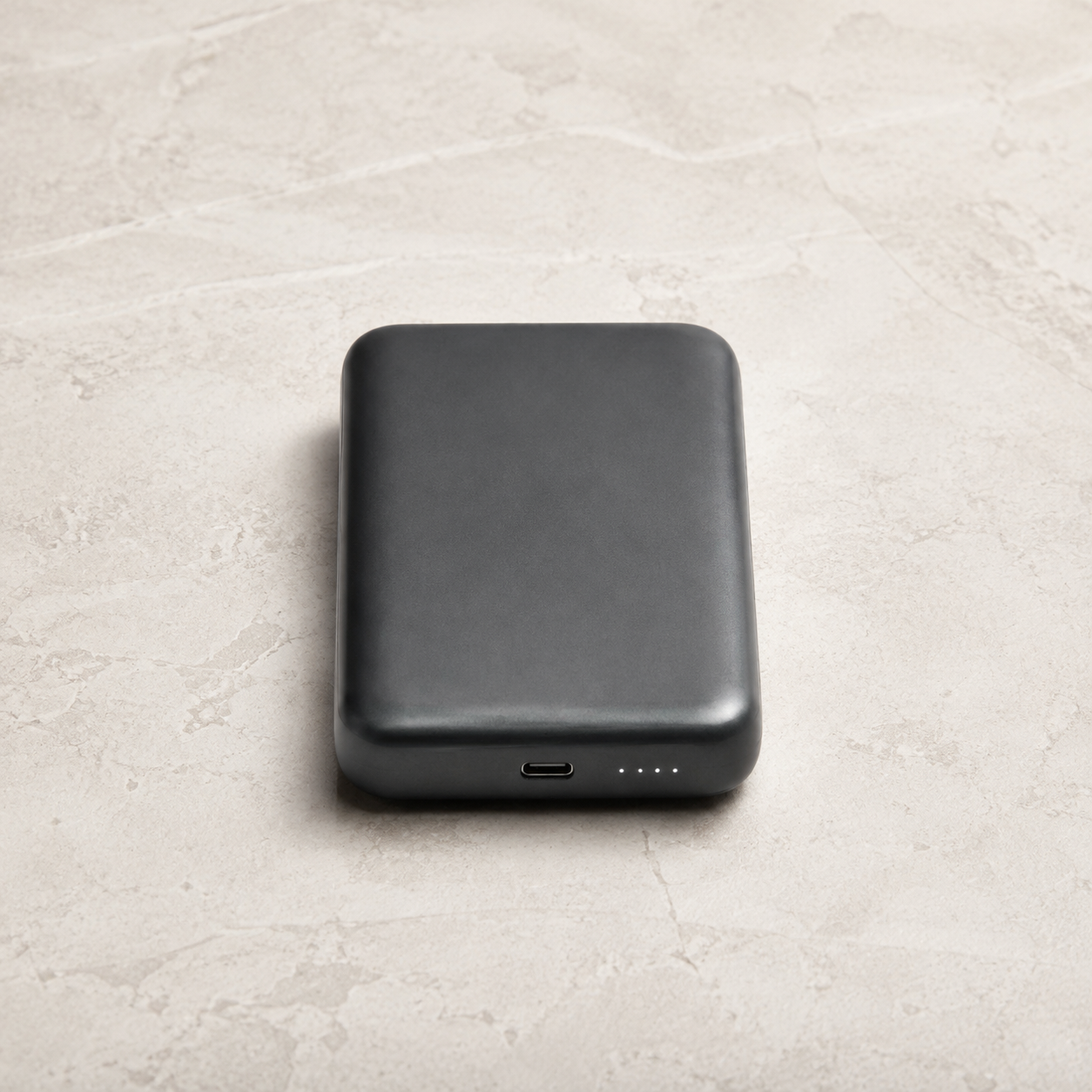
Caption: Power bank model prepared for wholesale charging product evaluation.
ALT text: Power bank product image for B2B wholesale guide.
AI image prompt: Realistic studio photo of a modern power bank with USB-C and USB-A ports, full product visible, clean light gray background, premium electronics catalog lighting, no text, no logo.
Image 2
Purpose: Charger testing photo.
Insert position: Safety and thermal behavior section.
Caption: Charging products should be checked for output, cable fit, and heat behavior.
ALT text: Asian factory technician testing power banks and fast chargers.
AI image prompt: Realistic electronics factory testing photo, Asian technician using testing equipment to check power bank and wall charger output on a clean bench, cables organized, bright industrial lighting, documentary style.
Image 3
Purpose: Packaging photo.
Insert position: Packaging clarity section.
Caption: Packaging should clearly show wattage, ports, plug type, and included accessories.
ALT text: Retail packaging for power banks and fast chargers prepared for export.
AI image prompt: Realistic photo of power bank and fast charger retail boxes, barcode labels, manuals, and export cartons on a packing table, clean warehouse, professional B2B product preparation.
Image 4
Purpose: Shipment photo.
Insert position: Conclusion area.
Caption: Shipment inspection confirms carton quantity, labels, and accessory completeness.
ALT text: Export cartons for charging accessories during shipment inspection.
AI image prompt: Realistic warehouse shipment inspection, stacked export cartons with charging accessory samples on table, Asian inspector checking packing list, clean logistics warehouse, natural light.
CTA and Popup Planning
Mid-article CTA position: After "Factory Testing and Shipment Inspection".
Mid-article CTA text: Ask for Product Catalog
Final CTA position: After conclusion.
Final CTA text: Contact Us
Popup trigger suggestion: Show after 30 seconds or when the reader reaches the packaging section.
Popup title: Need Charging Accessories for Wholesale?
Popup description: Send your capacity, wattage, plug type, and target quantity. ByteAero will prepare a quote discussion by email.
Form fields: Name required, Email required, Phone required, Company optional, Country optional, Product Requirements optional, Message optional.
Submit button text: Get a Quote