
Quick Article Directory
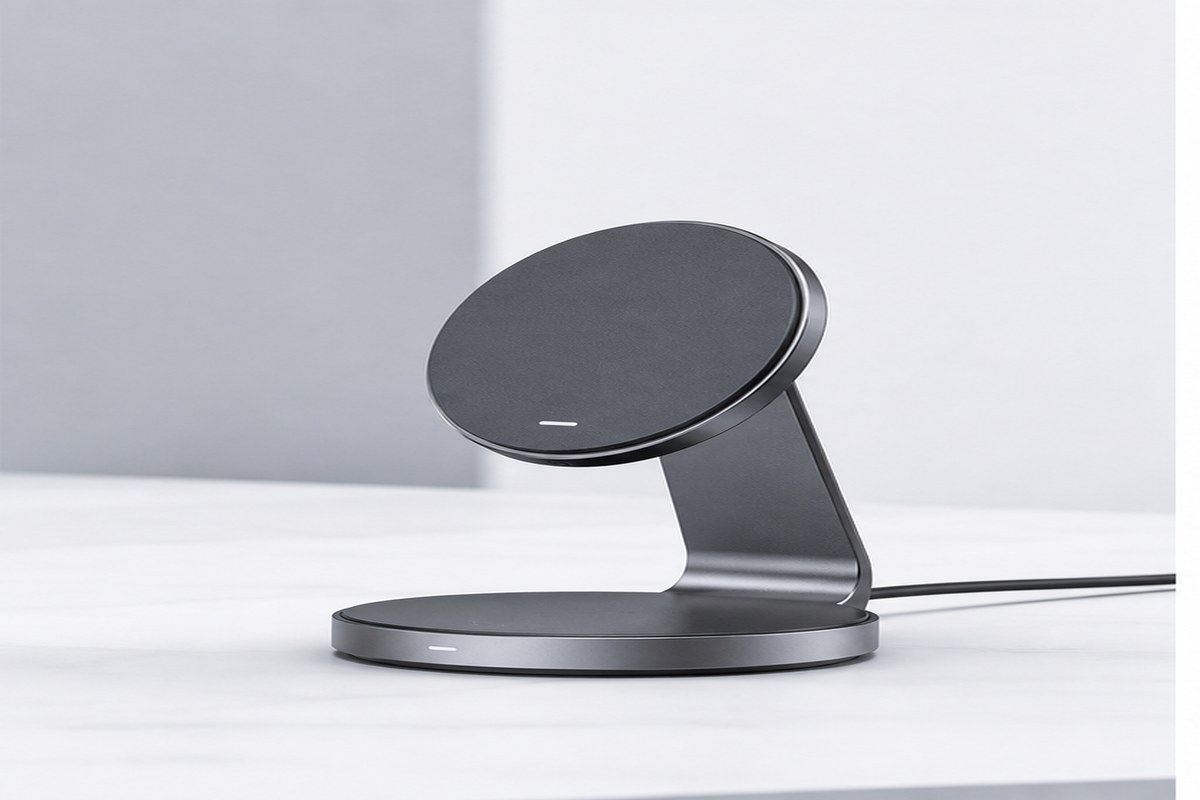
Qi2 Wireless Charger Wholesale Guide for B2B Buyers
Topic Research and Search Intent
Blog title: Qi2 Wireless Charger Wholesale Guide for B2B Buyers
Target keyword: Qi2 wireless charger wholesale guide
Search intent: Buyers want to know how to choose Qi2 wireless chargers, verify certification claims, compare magnetic alignment and charging performance, and prepare a reliable RFQ for retail or distribution.
Why this topic fits a B2B export website: Wireless chargers are visually simple but technically sensitive. Overseas buyers often search before procurement because certification, heat control, magnet strength, charger input, packaging claims, and device compatibility can affect returns. This makes the topic useful for Google SEO, AI Overview answers, and inquiry conversion.
Introduction
Qi2 wireless charging has changed how buyers evaluate magnetic wireless chargers. Earlier magnetic-style chargers often relied on appearance and general compatibility claims. Qi2 brings a stronger expectation of alignment, interoperability, and safety. The Wireless Power Consortium explains that Qi2 uses magnetic attachment to align devices and chargers, and its Qi2 information describes 15W charging for certified devices, with newer Qi2 25W development extending the standard further. Buyers should treat these claims carefully and confirm what the actual product supports before packaging approval.
For importers and retail buyers, Qi2 wireless chargers can serve several channels: mobile accessory retail, travel accessories, office desks, car interiors, corporate gifts, and premium device bundles. However, the same product photo can hide meaningful differences in coil design, magnet array, controller board, heat dissipation, cable quality, and packaging language. A strong sample review process is important before bulk ordering.
This guide explains how B2B buyers can source Qi2 wireless chargers with a practical focus on application, certification, factory testing, shipment inspection, packaging, and quotation preparation. Buyers comparing complete charging ecosystems may also review ByteAero's power bank and fast charger wholesale guide and USB-C cable wholesale quality guide.
Define the Product Application
A wireless charger for bedside use is different from a desktop stand, a car mount, or a foldable travel charger. The product application affects magnet strength, stand angle, cable length, input port, thermal design, and packaging. A travel model may need a foldable structure and compact storage. A desk stand should remain stable when the phone is tapped. A car charger must handle vibration, airflow, dashboard temperature, and mounting reliability.
Before requesting samples, define the target channel, target device group, expected retail price, and packaging style. Buyers should decide whether they need a pad, stand, 2-in-1 charger, 3-in-1 charger, car mount, or power-bank-integrated charger. If the product is positioned as premium, the housing finish, cable, and box design must support that positioning.
Key Specifications to Confirm
Qi2 Certification and Product Claims
The most important question is whether the product is genuinely Qi2 certified or only "Qi2 compatible" in marketing language. WPC's official Qi wireless charging information is a useful reference for understanding certified wireless charging. Buyers should ask suppliers for the certification status, product model information, and packaging claim guidance. If certification is not available, packaging should avoid implying official Qi2 certification.
Magnetic Alignment and Holding Strength
Magnetic alignment affects the user's first impression. A good charger should attach smoothly, center the phone consistently, and remain stable during normal use. For car mounts and stands, holding strength is especially important. Sample testing should include phones with and without compatible cases. Buyers should also test one-handed removal, because magnets that are too strong can make the stand move or detach.
Charging Input and Adapter Matching
Wireless charging performance depends on the charger, phone, input adapter, cable, and thermal condition. Buyers should confirm required input wattage and whether an adapter is included. A charger advertised with higher output may underperform if the user connects it to a weak adapter. Retail packaging should state required adapter conditions clearly.
Heat Control
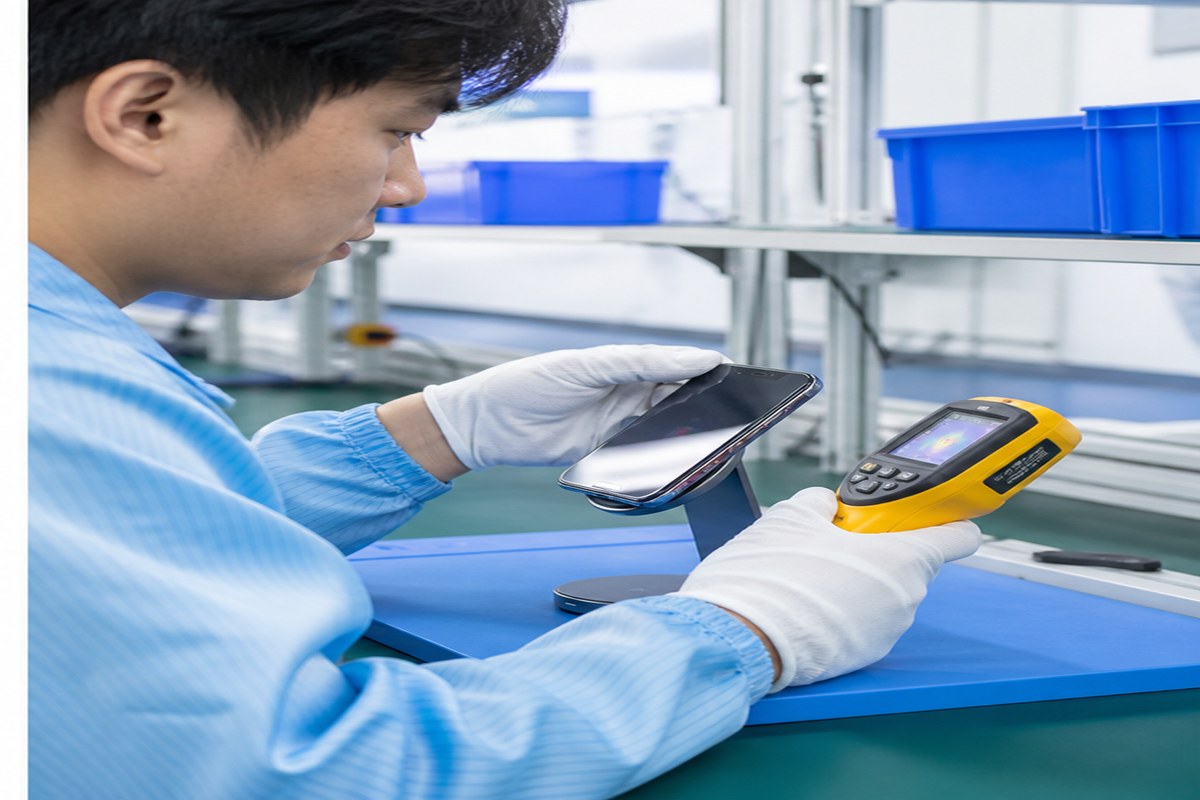
Wireless chargers naturally generate heat, but heat should remain within acceptable limits and should not cause repeated charging interruptions. Factory testing should include long-duration charging checks, surface temperature review, and behavior with common phone cases. If the product is a multi-device charger, test all charging zones at the same time.
Housing, Cable, and Finish
Aluminum, zinc alloy, ABS, PC, silicone, and fabric finishes create different price points. Premium-looking materials can increase perceived value, but they must be matched with stable electronics. Cable strain relief, anti-slip pads, hinge stiffness, and stand stability should be checked before sample approval.
Factory Testing and Shipment Inspection
Practical testing should include appearance inspection, magnet alignment, charging start time, long-duration charging, LED indicator behavior, input port stability, cable pull check, case compatibility check, and packaging verification. For 2-in-1 or 3-in-1 chargers, test all charging positions together. For car chargers, test mount stability, rotation mechanism, and clamp strength.
Shipment inspection should compare mass-production goods with the approved golden sample. Inspectors should check carton quantity, color mix, product labels, manual language, barcode, and accessory list. If the product includes lithium batteries, follow the relevant battery shipment documentation requirements with the logistics provider.
Packaging and Private Label Preparation
Wireless charger packaging should be clean and precise. Include charger type, input requirement, output claim, compatible device notes, included accessories, and warranty text. Avoid broad claims such as "fast charges every phone." A better statement is conditional: "Supports magnetic wireless charging with compatible devices and suitable input adapter."
Private-label buyers should approve logo placement on both product and packaging. For premium retail, a restrained box design with clear compatibility notes often performs better than crowded graphics. Buyers should also prepare product photos that show the full charger, phone placement, cable connection, and usage scenario.
Supplier Evaluation and RFQ Example
Supplier evaluation should include certification knowledge, engineering communication, sample consistency, thermal testing process, packaging support, and after-sales response. Ask whether the same coil, magnet array, control board, and housing will be used for repeat orders. If any component changes, request updated samples.
RFQ example: "We need Qi2 magnetic wireless chargers for retail distribution. Please quote desktop stand and foldable travel models for 1,000 and 3,000 units. Confirm certification status, charging output, required input adapter, magnet strength, material, packaging options, sample lead time, mass production lead time, and shipment inspection process."
Detailed Sample Review Checklist
Sample review should be done like a small project, not like a quick unboxing. Start with the packaging because it shows how the end customer will understand the product. Check whether the product name, charging claim, compatibility note, cable information, and included accessories are clear. Then inspect the charger surface, magnet area, anti-slip pad, hinge, stand angle, cable entry, and connector finish. Small appearance issues on a sample can become larger problems during mass production if they are not recorded early.
For functional review, use several phones and cases. Test a bare phone, a compatible magnetic case, a thick protective case, and a case with a raised camera area. Place the phone on the charger several times and observe whether it aligns naturally or requires manual adjustment. If the user must reposition the phone repeatedly, the product may create customer complaints even if it technically charges.
Thermal review should run longer than a few minutes. A practical buyer-side test can include 30 minutes, 60 minutes, and 90 minutes of charging under normal room conditions. Record the input adapter used, cable used, phone model, starting battery level, room temperature, and whether charging paused. This is not a laboratory certification test, but it gives the buyer real experience with the product before committing to a bulk order.
For multi-device chargers, test all zones together. A 3-in-1 charger may perform well with a phone alone but become warmer when a phone, earbuds case, and watch are all charging. Check whether the stand remains stable, whether the cable pulls the product backward, and whether the base weight feels adequate. The product application should feel calm and predictable, especially for bedside or office use.
Compliance and Documentation Planning
Wireless charger compliance depends on the market, product design, adapter inclusion, and certification claim. Buyers should ask suppliers what documents are available before approving packaging. If the order is for the EU, US, UK, GCC, or another regulated market, clarify required labels and importer information early. If an adapter is included, the compliance scope changes because the package includes a power product, not only a charging pad.
Documentation should also include user manual language, warranty statement, product rating label, and carton marks. For private-label orders, the brand owner should review whether the packaging makes any claim that cannot be supported. A conservative, accurate claim can be more valuable than an aggressive claim that causes returns.
How This Article Supports AI Search and Buyer Decisions
AI search systems often summarize direct answers to questions such as "What should I check before buying Qi2 wireless chargers wholesale?" or "How do I verify a magnetic wireless charger supplier?" This article is structured to answer those questions clearly. It separates certification, magnetic alignment, input adapter matching, heat control, packaging, factory testing, and RFQ preparation. That makes the content easier for buyers and answer engines to understand.
For conversion, the article also helps qualify inquiries. A buyer who reads the checklist may send a more complete message with charger type, certification need, adapter plan, packaging style, and order quantity. That saves time for both the buyer and ByteAero's sourcing team.
Practical Procurement Workflow
For a first order, buyers can follow a simple four-step workflow. First, create a target specification sheet based on the sales channel. Include charger type, certification requirement, input adapter plan, cable length, housing material, logo method, packaging style, and target quantity. Second, request two or three samples that represent different price levels. Do not compare only the lowest quotation; compare real charging behavior, finish, heat, packaging, and supplier communication.
Third, approve a golden sample and packaging proof before mass production. The golden sample should be stored with photos and notes so the purchasing, sales, and inspection teams all refer to the same standard. Fourth, define shipment inspection before production starts. Inspection should include appearance, magnetic attachment, charging, thermal behavior, accessories, packaging, carton marks, and random sampling from finished cartons.
This workflow is especially useful for buyers who plan repeat orders. A clear approval record reduces communication problems when the buyer reorders three or six months later. It also helps the supplier understand that the buyer values stable quality, not only a low initial price.
Internal Linking and Conversion Path
On a B2B website, this article should link to related product and support pages. Suggested internal links include wireless chargers, USB-C cables, power banks, inquiry form, and product detail templates. A reader who is interested in Qi2 charging may also need a compatible USB-C cable or GaN charger, so internal links can guide the buyer toward a complete sourcing request.
The conversion path should be simple. After the testing section, show a mid-article CTA asking the buyer to send charger type, market, certification need, and order quantity. At the end, repeat the quote CTA with a stronger procurement message. If the website uses an inquiry popup, avoid interrupting too early. A reader should first understand that ByteAero has practical sourcing knowledge.
FAQ
What is the main advantage of Qi2 wireless charging?
Qi2 improves magnetic alignment and certified wireless charging interoperability. For buyers, the value is easier product positioning and clearer customer expectations when certification claims are accurate.
Should wholesale buyers require Qi2 certification?
For premium retail and brand-sensitive markets, certification can improve trust. For price-sensitive channels, buyers should still use accurate packaging language and avoid implying certification that the product does not have.
What causes wireless charger complaints?
Common causes include weak adapter input, poor alignment, heat interruptions, unstable stands, incompatible cases, and unclear packaging claims.
What information should be included in an RFQ?
Include charger type, certification requirement, target output, input adapter plan, cable requirement, material, packaging style, logo needs, market, and order quantity.
Image Planning and AI Generation Prompts
Image 1 purpose: Product detail photo.
Insert position: After "Key Specifications to Confirm".
Caption: "Magnetic alignment, stand angle, cable quality, and surface finish should be checked before approving samples."
ALT text: "Qi2 wireless charger product detail for wholesale sample approval"
AI image prompt: "Realistic square product photography of one premium magnetic wireless charging stand, full product visible, clean white and blue technology background, no text, no CGI, authentic commercial photo style."
Image 2 purpose: Factory testing photo.
Insert position: After "Factory Testing and Shipment Inspection".
Caption: "Factory testing should include long-duration charging and temperature checks."
ALT text: "Qi2 wireless charger factory testing and thermal inspection"
AI image prompt: "Realistic electronics factory testing scene, Asian technician testing magnetic wireless chargers with smartphones and temperature meter on clean workbench, documentary manufacturing photography, natural lighting."
CTA and Inquiry Popup Plan
Mid-article CTA position: After "Factory Testing and Shipment Inspection".
CTA text: Send Your Requirements
CTA copy: "Share your wireless charger type, target market, certification needs, packaging style, and order quantity. ByteAero can suggest suitable models for sampling."
End CTA position: After "Conclusion".
CTA text: Get a Quote
Popup trigger suggestion: Show after 40% scroll, after 30 seconds, and on desktop exit intent.
Popup title: "Need Qi2 Wireless Chargers Wholesale?"
Popup copy: "Tell us your product type, packaging plan, and target market. We will reply with practical model options and sample suggestions."
Suggested form fields: Name, Email, Phone, Company, Country/Region, Charger Type, Certification Need, Order Quantity, Message.
Submit button text: Send Requirements
Conclusion
Qi2 wireless charger sourcing requires more than choosing a clean product photo. Buyers should verify certification claims, test magnetic alignment, review heat control, match the input adapter, inspect packaging language, and confirm supplier consistency. A clear RFQ and practical shipment inspection process help reduce returns and support repeat orders.
ByteAero supports international buyers sourcing wireless chargers, USB-C cables, fast chargers, power banks, and mobile accessories. Contact us with your customer requirements and target market to receive suitable wholesale options.