
Quick Article Directory
Car Charger Wholesale Sourcing Guide for Retail Distributors
Topic Research and Search Intent
Blog title: Car Charger Wholesale Sourcing Guide for Retail Distributors
Target keyword: car charger wholesale sourcing guide
Search intent: Buyers want to choose reliable car chargers, compare USB-C PD and multi-port output, verify fit and heat performance, and prepare clear wholesale requirements.
Why this topic fits a B2B export website: Car chargers are recurring retail accessories with strong demand from drivers, travel stores, gas stations, supermarkets, and electronics distributors. Buyers need practical guidance because vehicle socket fit, charging claims, heat control, and packaging clarity directly affect returns.
Introduction
Car chargers are small products with a large practical role. Drivers use them for smartphones, tablets, navigation, dash cams, wireless car mounts, and passengers' devices. For wholesale buyers, car chargers can be sold as standalone products, bundled with cables, paired with car phone holders, or positioned as travel accessories. The category is competitive, but well-specified models can generate repeat orders.
A car charger should be evaluated under real vehicle conditions. A product that works on a test bench may still feel loose in some sockets, become too warm during long drives, or confuse users with unclear port output. Buyers should look beyond the shell design and confirm plug fit, power distribution, USB-C PD behavior, protection features, LED brightness, and packaging claims.
This guide explains how importers, distributors, and retail buyers can source car chargers with a practical B2B process. It covers product application, key specifications, factory testing, shipment inspection, packaging, RFQ preparation, and common buyer mistakes. Buyers planning car accessory bundles may also review ByteAero's USB-C cable wholesale quality guide.
Define the Sales Channel
Car charger requirements change by channel. Gas station and convenience retail may need simple, affordable chargers with strong packaging visibility. Electronics stores may prefer USB-C PD, dual-port designs, and premium finish. Online marketplaces may need multiple color options, bundled cables, and clear feature images. Fleet or corporate customers may prioritize stable supply and practical packaging.
Before sampling, decide whether the product is for budget retail, mainstream fast charging, premium travel, or bundled car accessory kits. This decision affects wattage, port layout, material, cable bundle, and target price.
Key Specifications to Confirm
Input Voltage and Vehicle Compatibility
Most car chargers are designed for common vehicle power sockets, but buyers should confirm input voltage range and target vehicles. A charger may be used in passenger cars, SUVs, trucks, or commercial vehicles. The metal contact design and plug length affect fit. Sample testing should include several vehicle sockets when possible.
USB-C PD and USB-A Output
USB-C PD is increasingly expected, especially for newer phones and tablets. USB-A remains useful for older cables and budget channels. Multi-port models should state output distribution clearly. If a charger is advertised as 60W total, buyers should know how much each port delivers when used together.
Heat and Long-Drive Testing
Car chargers operate in enclosed vehicle interiors where temperature can rise. Sample testing should include long-duration charging, especially in warm environments. Check whether output remains stable and whether the shell becomes uncomfortably hot. LED indicators should be visible but not distracting at night.
Shell Material and Size
Compact metal-shell chargers look premium, while plastic shells may be more cost-effective. Very small chargers can look clean but may be harder to remove from the socket. Buyers should test removal grip and user comfort. The best design balances appearance, heat dissipation, and practical handling.
Cable Bundle Options
Bundling a USB-C cable can increase retail value, but the cable must match the charger's promised output. If the charger supports fast charging but the cable is low-spec, customers may complain. Bundle packaging should list cable length and connector type clearly.
Factory Testing and Shipment Inspection
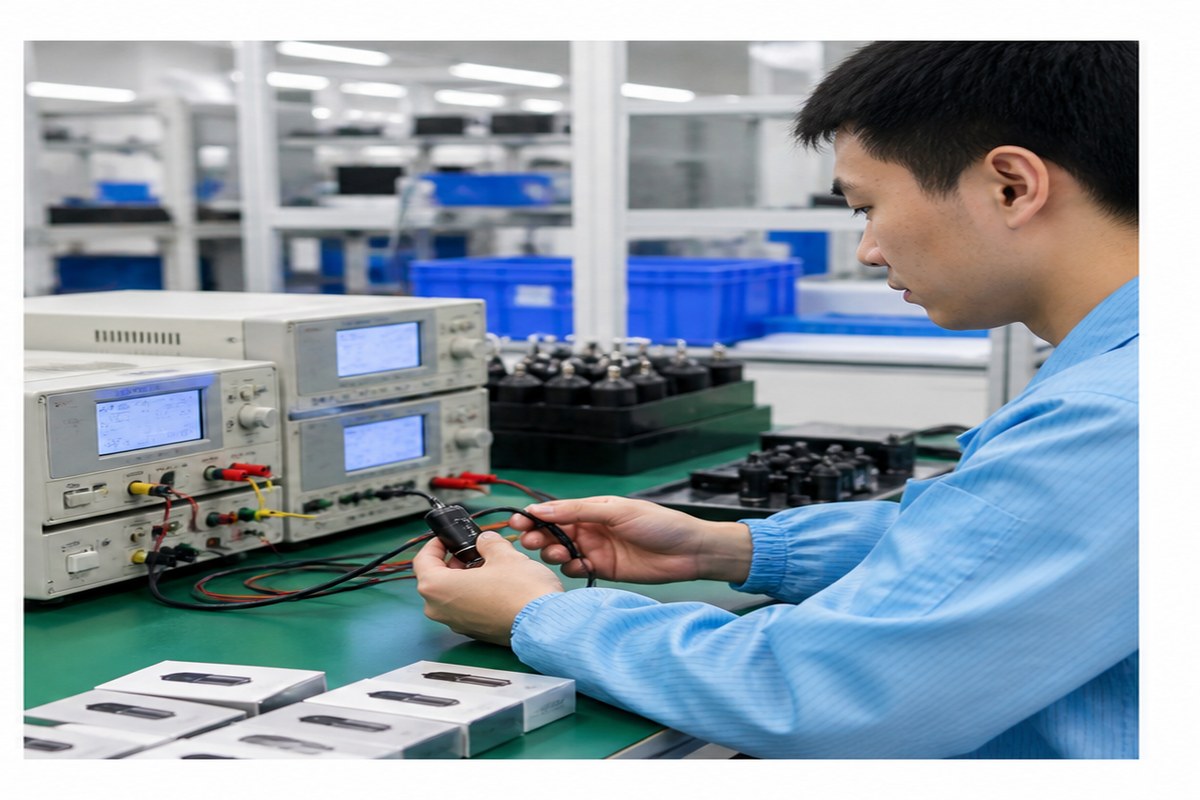
Factory testing should include appearance inspection, plug fit test, power output test, multi-port output test, USB-C PD behavior, long-duration charging, LED indicator check, insertion and removal test, and packaging verification. For cable bundles, test the charger and cable together.
Shipment inspection should confirm color mix, plug type, packaging artwork, barcode, accessory list, carton marks, and random functional samples. A golden sample should be kept for comparison. Buyers should also discuss product liability, compliance documents, and market labeling before mass production.
Packaging and Retail Presentation
Car charger packaging should be easy to understand at a glance. Include total output, port configuration, cable included or not included, compatible device notes, and safety wording. Avoid claims such as "charges all phones at maximum speed." A better approach is to describe support for compatible fast-charging devices and proper cables.
For convenience retail, hanging boxes or blister-style packaging may work. For premium electronics retail, a rigid box or clean color box may be better. Private-label buyers should keep the front panel simple and move technical details to the back.
Supplier Evaluation and RFQ Example
Evaluate suppliers by sample quality, power testing knowledge, packaging support, lead time, and after-sales process. Ask whether the same internal board and contact design will be used for repeat production. If the metal shell, PCB, or output protocol changes, updated samples should be approved.
RFQ example: "We need dual-port car chargers for retail distribution. Please quote 30W, 45W, and 60W versions with USB-C PD and USB-A options, black and silver shell, optional USB-C cable bundle, private-label packaging, and carton details. Confirm input voltage, output distribution, sample lead time, production lead time, and inspection process."
Common Buyer Mistakes
Some buyers compare only wattage and ignore port distribution. Others approve samples without trying real vehicle sockets. Packaging can also create problems when output claims are unclear. For car accessories, practical use testing is especially important because fit and heat behavior influence customer satisfaction.
Detailed Sample Review Checklist
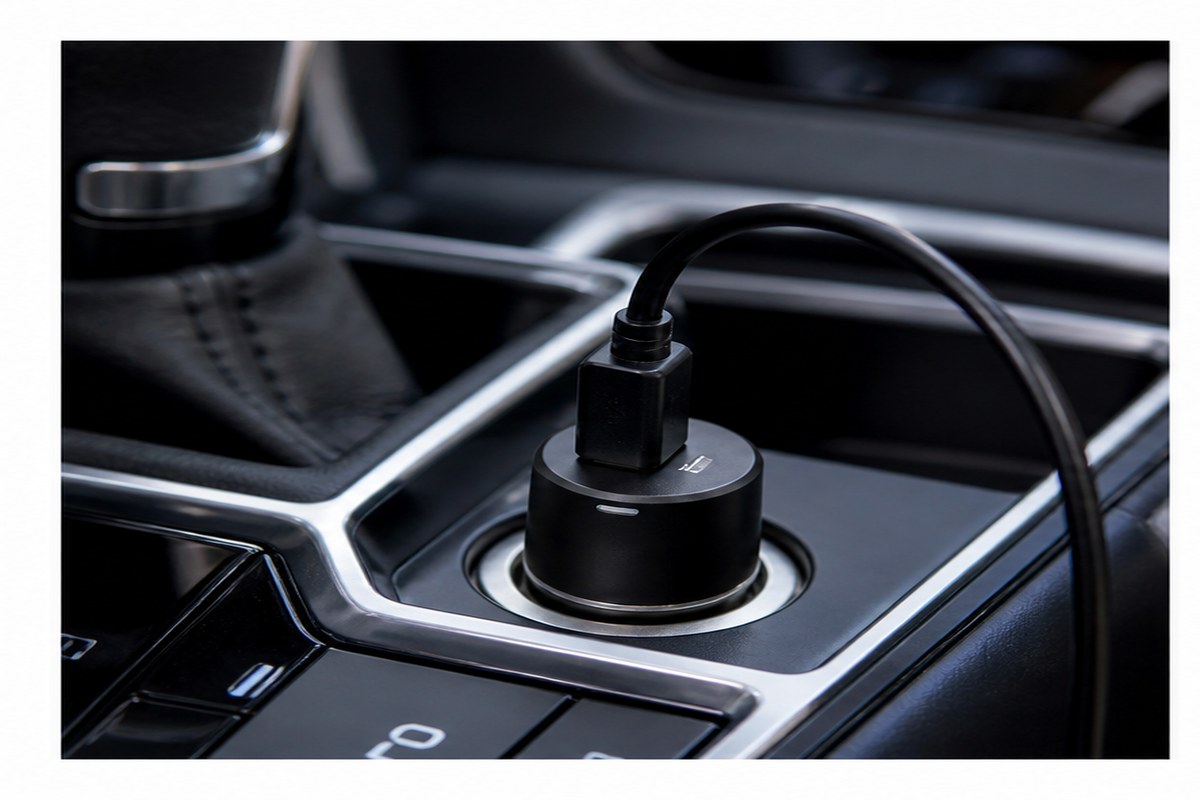
A car charger sample should be reviewed in both a test environment and a real vehicle. Start with the body size, contact points, and removal grip. Insert it into several vehicle sockets if available. The charger should sit firmly without excessive wobble, but it should also be easy enough to remove. A very flush design may look premium, but if users struggle to remove it, customer feedback may suffer.
Test charging with realistic devices. Use a modern smartphone, an older phone with USB-A cable, a tablet if the charger claims higher wattage, and a second device for multi-port models. Check whether charging starts quickly and whether the LED indicator is too bright for night driving. If the charger has a metal shell, check heat after a longer test because vehicle interiors can become warm.
For cable bundles, test the bundled cable, not only a high-quality lab cable. The end customer will judge the complete retail package. If the cable is short, stiff, or not suitable for fast charging, the bundle may receive poor reviews even when the charger body is good. Packaging should list the included cable length and connector type.
Buyers should also test packaging durability. Car chargers are often sold through high-traffic retail channels, where packages may be handled frequently. Hanging holes, blister cards, window boxes, or small color boxes should remain presentable. If the product is sold in convenience stores or gas stations, shelf visibility matters.
Regional and Channel Considerations
Car accessory demand varies by market. In some markets, buyers prefer budget dual-port models for impulse purchase. In others, USB-C PD and premium metal-shell chargers sell better. For fleet customers or corporate gift programs, a simple reliable model with logo packaging may be more suitable than a feature-heavy retail SKU.
Buyers should also consider climate. A charger sold in hot regions should be tested with thermal behavior in mind. A product used in cold climates should maintain stable contact and avoid brittle plastic feel. These are practical experience points that may not appear on a standard quotation sheet but can influence long-term customer satisfaction.
How This Article Supports AI Search and Buyer Decisions
AI search frequently summarizes "best practices" for procurement and product selection. This article answers buyer questions in a structured way: wattage selection, USB-C PD, socket fit, heat testing, packaging, supplier evaluation, and RFQ content. It also includes practical terms such as shipment inspection, factory testing, customer requirements, and installation preparation, which make it useful for decision-stage B2B searches.
For conversion, the article helps buyers prepare clearer inquiries. Instead of asking for "car charger price," a reader may specify wattage, port configuration, shell material, cable bundle, packaging, and destination market. That creates a more professional sales conversation.
Practical Procurement Workflow
A useful car charger sourcing workflow starts with channel planning. Decide whether the charger is for convenience retail, electronics stores, online marketplace sales, car accessory distributors, or corporate gift programs. Then define product type, wattage, port layout, shell material, cable bundle, packaging, target price, and order quantity.
The second step is sample testing. Buyers should test the charger in real vehicles, not only on a desk. Check socket fit, removal grip, LED brightness, heat after longer use, and charging behavior with several devices. For multi-port chargers, test simultaneous charging. If a cable is bundled, test the exact cable that will be packed with the product.
The third step is packaging approval. Car charger packaging should explain output, port type, cable inclusion, and compatibility conditions clearly. The fourth step is shipment inspection. Confirm SKU mix, carton quantity, color, accessories, barcode, and random functional samples. This process is simple, but it prevents many common retail complaints.
Internal Linking and Conversion Path
This article should link to USB-C cable, GaN charger, wireless charger, and magnetic phone holder content. These products are naturally purchased together for car and travel accessory channels. Strong internal linking helps buyers build a complete sourcing request instead of asking for one product only.
The mid-article CTA should appear after testing because that is where the buyer understands the value of a quality-focused supplier. The final CTA should invite the buyer to send wattage, port layout, cable bundle, market, and order quantity. That makes the inquiry easier to answer and more likely to convert.
FAQ
What car charger wattage is best for wholesale?
30W to 45W works for many mainstream phone users. 60W or higher can fit premium channels, tablets, or multi-device charging. The best choice depends on target customers and price positioning.
Should car chargers include USB-A?
USB-A is still useful for customers with older cables. USB-C is important for modern fast charging. Many buyers choose mixed-port models for broader compatibility.
How should car chargers be tested?
Test socket fit, power output, multi-port charging, heat during long use, LED behavior, packaging, and bundled cable performance.
What should buyers include in an RFQ?
Include wattage, port layout, shell material, cable bundle, packaging, logo needs, target market, compliance expectations, and order quantity.
Image Planning and AI Generation Prompts
Image 1 purpose: Product application photo.
Insert position: After "Introduction".
Caption: "Real vehicle testing helps confirm socket fit, LED visibility, and practical charging behavior."
ALT text: "Car charger product application testing inside vehicle"
AI image prompt: "Realistic photo of one compact USB-C car charger plugged into a modern car console, phone charging cable connected, natural daylight, full product visible, premium but authentic, no CGI."
Image 2 purpose: Factory testing photo.
Insert position: After "Factory Testing and Shipment Inspection".
Caption: "Car charger inspection should verify output, plug fit, and packaging before shipment."
ALT text: "Car charger factory testing and shipment inspection"
AI image prompt: "Realistic electronics factory quality control scene, Asian technician testing car chargers with power meters and organized retail boxes, clean workbench, documentary B2B manufacturing style."
CTA and Inquiry Popup Plan
Mid-article CTA position: After "Factory Testing and Shipment Inspection".
CTA text: Send Your Requirements
CTA copy: "Share your target wattage, port layout, cable bundle, packaging style, and destination market. ByteAero can recommend practical car charger options."
End CTA position: After "Conclusion".
CTA text: Get a Quote
Popup trigger suggestion: 40% scroll, 30 seconds, and exit intent.
Popup title: "Need Car Chargers for Wholesale?"
Popup copy: "Tell us your required output, port configuration, and packaging plan. We will reply with suitable models for sampling."
Suggested form fields: Name, Email, Phone, Company, Country/Region, Wattage, Port Type, Order Quantity, Message.
Submit button text: Send Requirements
Conclusion
Car charger wholesale sourcing should focus on real vehicle usability, power output, heat control, port distribution, packaging clarity, and shipment inspection. Buyers who test samples under practical conditions can reduce returns and build a more reliable accessory lineup.
ByteAero helps B2B buyers source car chargers, USB-C cables, wireless chargers, phone holders, and mobile accessories. Contact us with your requirements to receive model suggestions and quotation support.