
Quick Article Directory
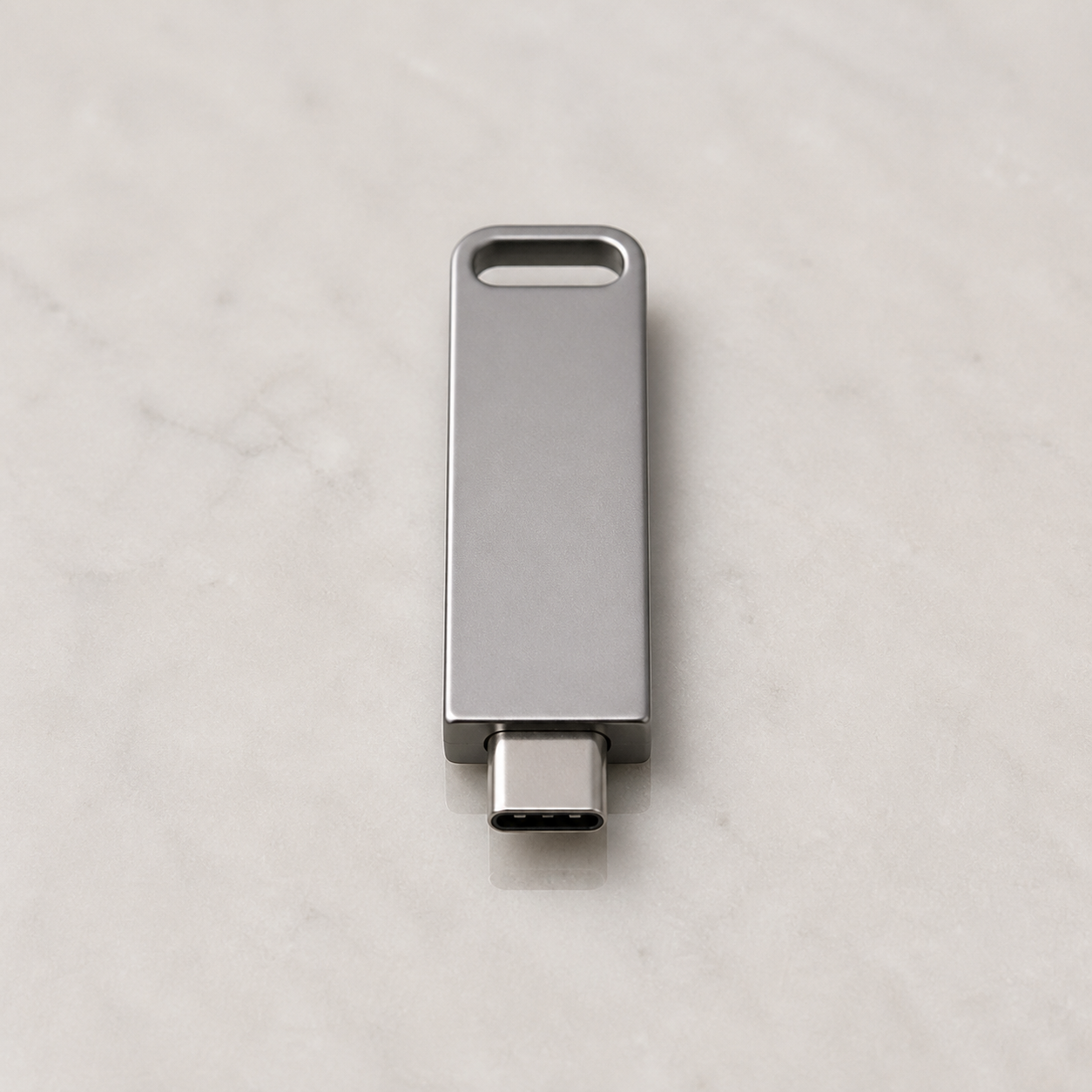
USB-C Flash Drive Wholesale Guide for Storage Accessory Buyers
Topic Research and Search Intent
Blog title: USB-C Flash Drive Wholesale Guide for Storage Accessory Buyers
Target keyword: USB-C flash drive wholesale
Search intent: Buyers want to source USB-C drives for laptops, tablets, and compatible phones while checking genuine capacity, transfer performance, connector construction, formatting, packaging, and supplier reliability.
Why this topic fits a B2B export website: USB-C drives sit at the intersection of office electronics and mobile accessories. They can be sold with hubs, tablets, laptops, and cables, making them a useful cross-category inquiry product.
Introduction
USB-C flash drives are convenient because they can serve modern laptops, tablets, and some phones without an additional adapter. They are used for document transfer, classroom materials, presentation files, photo backup, promotional content, and travel. Yet product pages often compress important differences into one phrase: "Type-C USB drive." Capacity, interface speed, storage quality, controller behavior, heat, file system, and host-device capability all affect the experience.
Buyers should approve a flash drive through a real test plan, not an empty capacity label. This guide explains what to ask, what to test, and how to prepare a precise order. See related ByteAero resources on USB-C hubs, laptop docking stations, and USB-C cables.
Capacity and Interface Claims
Select capacities that fit the channel: lower capacities for promotional or basic document storage, mid-range capacities for consumer retail, and higher capacities for creators or business users. Validate usable capacity with a defined test process. Confirm whether the drive is USB 2.0, USB 3.x, or another implementation, and state the supported interface accurately.
USB Type-C describes the connector, not a performance tier. USB-IF's product and packaging guidance notes that Type-C, USB 3.2, USB4, and USB Power Delivery are not interchangeable terms. Packaging should describe actual supported data performance rather than using a connector name to imply an unverified speed.
Host Compatibility and Physical Design
Test the drive with the intended host mix: Windows laptop, Mac where relevant, USB-C tablet, and supported phone models. Check insertion clearance around thick cases, adjacent ports, and laptop chassis. A rotating dual connector, sliding shell, cap, or keyring loop introduces moving parts that need repeated-use testing.
Formatting influences customer use. Confirm the supplied file system, whether the destination devices recognize it, and what documentation is included if customers need a different format. Avoid implying that every Type-C phone can read external storage; this depends on the host and operating system.
Factory Testing and Shipment Inspection
Factory testing should verify capacity, read/write behavior against the approved specification, connector insertion, file copy, surface finish, label or logo placement, cap/slider operation, and packaging. Sample test files should be copied, read back, deleted, and recopied. For high-volume orders, agree on capacity and functional sampling methods before production.
Shipment inspection should include random packaged drives from multiple cartons. Check model, capacity label, connector, file transfer, accessory count, barcode, retail box, and carton count. Keep the approved drive and packaging proof as the golden sample; externally similar capacities must never be mixed.
Supplier Evaluation and RFQ Example
Ask the supplier to identify memory type, controller policy, actual interface, quality checks, format, and component substitution controls. Ask how capacity is verified and whether batch traceability exists. A credible supplier will be specific about test conditions instead of quoting only a theoretical maximum speed.
RFQ example: "We need USB-C flash drives for office and mobile accessory retail. Please quote 64GB, 128GB, and 256GB models with USB-C connector, optional USB-A dual connector, metal or durable plastic housing, English packaging, barcode labels, and private-logo options. Confirm interface specification, tested transfer method, supplied format, sample lead time, production lead time, and inspection process."
FAQ
Does USB-C automatically mean fast transfer speed?
No. Type-C identifies the connector. The actual interface and host capability determine data performance.
Why should capacity be tested before shipment?
Storage capacity is a core purchase promise. Testing helps prevent wrong memory configuration, poor formatting, or batch-mixing problems.
Can a USB-C drive work with all phones?
No. It depends on the phone, operating system, power behavior, file system, and case clearance. Test the target host devices.
Image Planning and AI Generation Prompts
Image 1 purpose: Product-detail image.
Insert position: After "Introduction".
Caption: "A USB-C drive should be evaluated for both connector fit and real file-transfer use."
ALT text: "USB-C flash drive connected to a laptop for data transfer"
AI image prompt: "Authentic product photograph of one compact USB-C flash drive connected to a modern laptop on a clean office desk, full drive visible, soft natural daylight, no text, no logos, realistic photography."
Image 2 purpose: Storage test image.
Insert position: After "Factory Testing and Shipment Inspection".
Caption: "Capacity and file-transfer checks should be completed before finished drives are packed for shipment."
ALT text: "Asian technician testing USB-C flash drives at a factory quality-control bench"
AI image prompt: "Realistic electronics factory documentation photograph, Asian technician testing several USB-C flash drives with laptop and USB test equipment on a clean bench, products visible, no text or logos."
CTA and Inquiry Popup Plan
Mid-article CTA position: After "Factory Testing and Shipment Inspection".
CTA text: Send Your Requirements
End CTA position: After "Conclusion".
CTA text: Ask for Product Catalog
Popup trigger suggestion: 40% scroll, 30 seconds on page, or exit intent.
Popup title: "Source USB-C Storage Accessories"
Popup copy: "Send your capacity range, interface, connector style, packaging request, and expected volume."
Suggested form fields: Name, Email, Phone, Company, Country/Region, Capacity Range, Quantity, Message.
Submit button text: Send Requirements
Conclusion
USB-C flash-drive sourcing needs honest capacity and interface claims, tests with intended host devices, controlled connector quality, and accurate packaging. A clear approval routine protects both the buyer and the end user. ByteAero can support office and mobile accessory programs. Request a quote with your storage requirements.